Gyeongbu Line KTX End-to-End: Seoul to Busan in 5 Days
A 5-day journey along the Gyeongbu Line, the backbone of Korea's KTX network. Travel from Seoul through Daejeon, Daegu, and Gyeongju to Busan — all direct, no transfers needed. Experience Korea's history and culture as the train cuts through the heart of the peninsula.
Duration
5 days
Location
Seoul, Daejeon, Daegu, Gyeongju & Busan
Places
21 places
The whole route
Every place on this course, joined in order on one map.
Daily itinerary
Places are grouped by day so the whole route stays easy to scan.
Day 1
Seoul to Daejeon: KTX 49 Minutes
4 places
Depart from Seoul Station on the Gyeongbu Line KTX. In just 49 minutes, arrive in Daejeon — Korea's science and technology hub. Explore the lush Hanbat Arboretum and visit the iconic Expo Science Park. End the day with a pilgrimage to Sungsimdang, the legendary bakery that has been a Daejeon institution since 1956.
Getting there
Seoul Station → (Gyeongbu Line KTX) → Daejeon Station
About 49 min
 Transit
Stop 1Seoul Station
Seoul's main rail hub, where Gyeongbu and Gangneung line trains start and the airport railroad and subway lines meet.
Before you go: Before or after your train, step into Culture Station Seoul 284 beside the plaza to see the 1925 station building and its current exhibition.
405 Hangang-daero, Yongsan-gu, Seoul, South Korea
Open in maps
 Transit
Stop 2Daejeon Station
A rail station in Dong-gu on the Gyeongbu Line and Gyeongbu High-Speed Railway, used for KTX, SRT and conventional trains and for changing to Daejeon Metro Line 1.
Before you go: To change to Daejeon Metro Line 1, head out to the West Plaza, where the Line 1 Daejeon Station entrance is.
215 Jungang-ro, Dong-gu, Daejeon, South Korea
Open in maps
 Sights4.6
Stop 3Hanbat Arboretum
Daejeon's public arboretum in the city center between Government Complex Daejeon and Expo Science Park, combining themed gardens, woodland paths and a tropical plant house.
Before you go: Take Daejeon Metro Line 1 to Government Complex (Jeongbu Cheongsa) Station, leave by Exit 3 and walk toward Dunsan Police Station; the arboretum is opposite the complex's north gate.
169 Dunsan-daero, Seo-gu, Daejeon, South Korea
Open in maps
 Sights4.2
Stop 4Daejeon EXPO Science Park
Daejeon EXPO Science Park was created to use the site and facilities of the 1993 Daejeon World Expo for science education. Its 93-metre Hanbit Tower has an observatory overlooking the park and the city. The park also features a music fountain area extending toward Expo Bridge and a media façade set against the tower.
Before you go: Hanbit Tower is 93 metres tall and is described as an observatory for views of the park and Daejeon.
480 Daedeok-daero, Yuseong District, Daejeon, South Korea
Open in maps
Places to eat nearby
 Food4.1
Daejeon Jungang Market
Daejeon Jungang Market is a large traditional market stretching from Daejeon Station to the banks of the Daejeoncheon Stream, and it began as a marketplace that grew up around the station after the Gyeongbu Line opened. Its lanes are grouped by trade, from dried seafood, fish, herbal medicine, hanbok and tableware to food alleys known for sundae gukbap and kalguksu.
Before you go: The market is close to Exit 1 of Daejeon Station on Daejeon Metro Line 1, so it is easy to visit before or after a train.
783 Daejeon-ro, Dong-gu, Daejeon, South Korea
Open in maps
Day 2
Daejeon to Daegu: KTX 50 Minutes
2 places
Continue south on the Gyeongbu Line to Dongdaegu Station in 50 minutes. Daegu is known for its vibrant markets and distinctive food culture. Explore the city's eclectic neighborhoods from Dongdaegu Station as your base.
Getting there
Daejeon Station → (Gyeongbu Line KTX) → Dongdaegu Station
About 50 min
- Transit
Stop 1Daejeon Station
A rail station in Dong-gu on the Gyeongbu Line and Gyeongbu High-Speed Railway, used for KTX, SRT and conventional trains and for changing to Daejeon Metro Line 1.
Before you go: To change to Daejeon Metro Line 1, head out to the West Plaza, where the Line 1 Daejeon Station entrance is.
215 Jungang-ro, Dong-gu, Daejeon, South Korea
Open in maps
 Transit
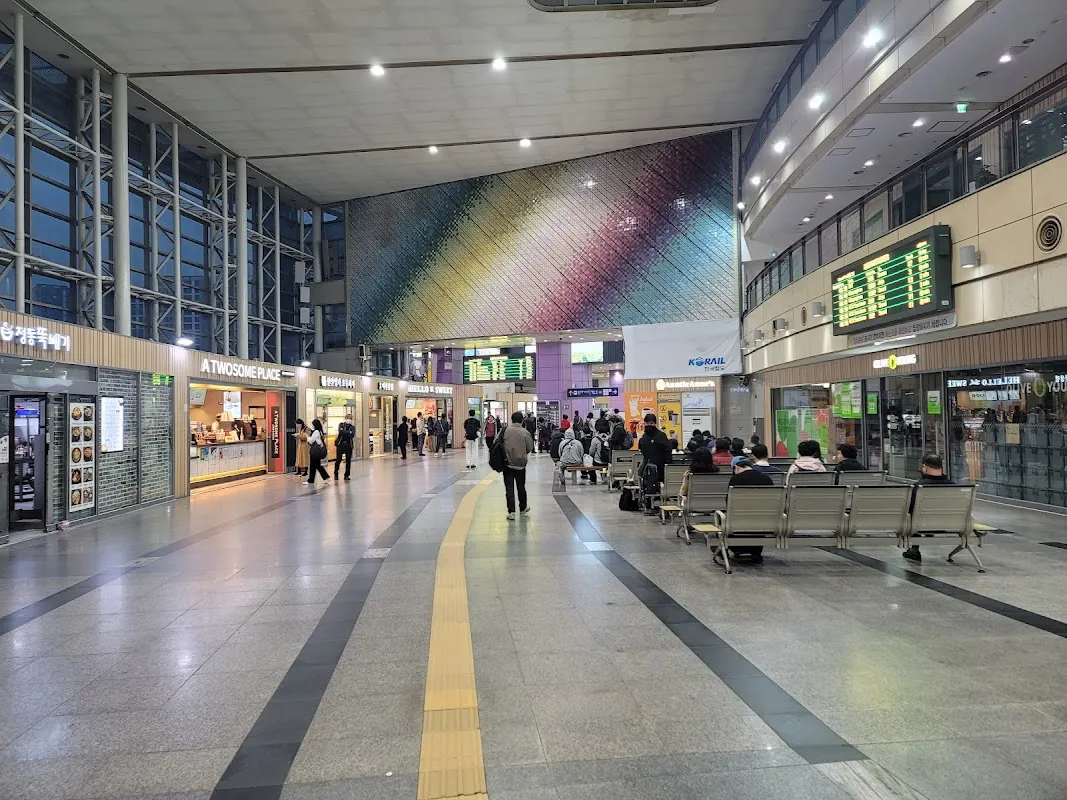
Stop 2Dongdaegu Station
Daegu's KTX station in Dong-gu, where Daegu Metro Line 1, the Daegyeong commuter line and a bus transfer centre all connect in one place.
Before you go: To change to a bus, head to the Dongdaegu Transfer Center, which links to the KTX station on its 3rd floor. Buses toward the Seoul area, Chungcheong, Honam and Incheon and Gimhae airports board on the 3rd floor, and those toward Yeongnam and Gangwon on the 4th.
550 Dongdaegu-ro, Dong-gu, Daegu, South Korea
Open in maps
Day 3
Daegu to Gyeongju: KTX 25 Minutes
5 places
A quick 25-minute KTX ride brings you to Singyeongju Station, gateway to the ancient Silla Kingdom capital. Visit the magnificent Bulguksa Temple and Seokguram Grotto, both UNESCO World Heritage Sites. Stroll through the royal tombs at Tumuli Park as dusk falls.
Getting there
Dongdaegu Station → (Gyeongbu Line KTX) → Singyeongju Station
About 25 min
- Transit
Stop 1Dongdaegu Station
Daegu's KTX station in Dong-gu, where Daegu Metro Line 1, the Daegyeong commuter line and a bus transfer centre all connect in one place.
Before you go: To change to a bus, head to the Dongdaegu Transfer Center, which links to the KTX station on its 3rd floor. Buses toward the Seoul area, Chungcheong, Honam and Incheon and Gimhae airports board on the 3rd floor, and those toward Yeongnam and Gangwon on the 4th.
550 Dongdaegu-ro, Dong-gu, Daegu, South Korea
Open in maps
 Transit
Stop 2Singyeongju Station
KTX station for Gyeongju, the ancient Silla capital. Located outside city center (~20min taxi). Multiple access routes: Gyeongbu KTX from Seoul, Jungang Line from Cheongnyangni, Donghae Line from Gangneung.
Before you go: Gyeongju city center is about 20 minutes by taxi or bus from the station — not walkable.
80 Singyeongjuyeok-ro, Geoncheon-eup, Gyeongju, Gyeongbuk, South Korea
Open in maps
 Sights4.6
Stop 3Bulguksa Temple
Bulguksa is a Silla Buddhist temple on the slopes of Tohamsan in Gyeongju. Inscribed with Seokguram as a UNESCO World Heritage site, it features Dabotap, Seokgatap and stone terraces.
Before you go: Compare the different forms of the two stone pagodas in front of Daeungjeon Hall.
385 Bulguk-ro, Gyeongju, Gyeongsangbuk-do, South Korea
Open in maps
 Sights4.4
Stop 4Seokguram Grotto
A Silla-era artificial grotto of white granite on the slopes of Tohamsan, with 38 surviving carved figures in all, centered on a seated Buddha.
Before you go: It is about a 10-minute walk from the Seokguram parking lot to the grotto, so wear comfortable shoes.
238 Seokgul-ro, Gyeongju, Gyeongsangbuk-do, South Korea
Open in maps
 Sights4.5
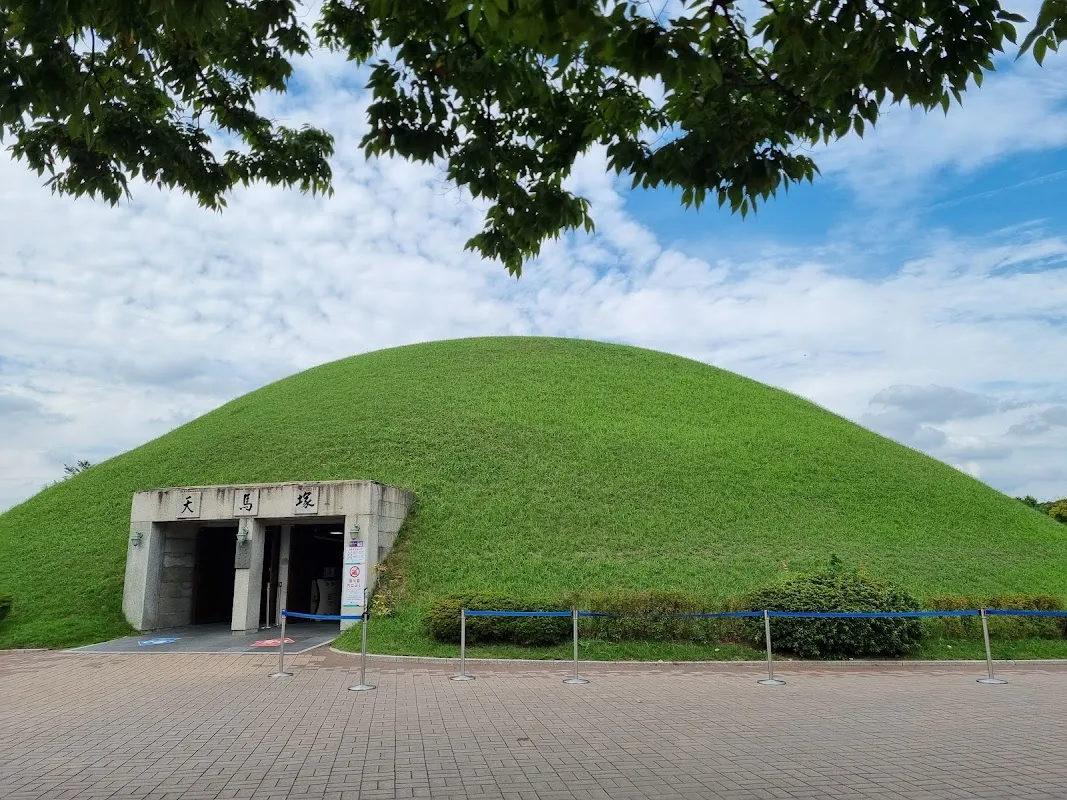
Stop 5Daereungwon Tumuli Park
Daereungwon is a historic park in Hwangnam-dong, central Gyeongju, where Silla burial mounds gather. About twenty large mounds rise like a ridgeline, and Cheonmachong, excavated in 1973, is the only tomb here whose interior is open to the public. It is named after Cheonmado, a painting of a heavenly horse on a saddle flap found inside.
Before you go: A walk through Daereungwon and entry to Cheonmachong are separate; check the tomb’s admission fee and closing time.
31-1 Hwangnam-dong, Gyeongju, Gyeongsangbuk-do, South Korea
Open in maps
Places to eat nearby
 Food4.2
Hwangnam Bread
Hwangnam Bread is a red bean bread that the late Choi Yeong-hwa first made and sold in Gyeongju's Hwangnam-dong in 1939, and the neighborhood name customers used became its name. At the Gyeongju main store on Taejong-ro it is still shaped by hand one at a time, and each top is pressed with a comb pattern that evokes Silla.
Before you go: The main store is at 783 Taejong-ro (Hwango-dong), Gyeongju. The bread began in Hwangnam-dong, but today's main store is on Taejong-ro.
783 Taejong-ro, Gyeongju, Gyeongsangbuk-do, South Korea
Open in maps
Day 4
Gyeongju: Full Day in the Museum Without Walls
5 places
Spend a full day exploring Gyeongju without any train travel. Visit the Gyeongju National Museum for Silla Kingdom treasures, discover the charming Gyochon Village, and walk the trendy Hwangnidan Street. End the evening at Donggung and Wolji (Anapji Pond), stunningly beautiful when lit up at night.
 Sights4.6
Stop 1Gyeongju National Museum
Gyeongju National Museum presents the history and art of the Silla kingdom in one place. Gold crowns from royal tombs, everyday objects from Donggung Palace and Wolji Pond, and the Divine Bell of King Seongdeok in the garden are all here.
Before you go: Guide leaflets in English, Japanese and Chinese are available in the visitor information section of the museum website.
186 Iljeong-ro, Gyeongju, Gyeongsangbuk-do, South Korea
Open in maps
 Sights4.1
Stop 2Gyeongju Gyochon Village
Gyeongju Gyochon Village was the site of Gukhak, founded in 682 as Silla’s first national educational institution; it later became a local school and Confucian academy. Traditional hanok remain, including the Choi family house, while nearby Silla sites include Gyerim, Jaemaejeong Well, and Woljeonggyo Bridge. Here, old houses and Silla heritage sit side by side, and the nearby wooden Woljeonggyo is notable for its structure and illuminated night views.
Before you go: The village names Gyo-dong, Gyochon, and Gyori are linked to the former presence of a Confucian school.
39-2 Gyochon-gil, Gyo-dong, Gyeongju, Gyeongsangbuk-do, South Korea
Open in maps
 Streets4.2
Stop 3Hwangnidan-gil Street
Hwangnidan-gil is the name for Poseok-ro, the road running from Naenam Intersection to the Hwangnam Elementary School intersection in Gyeongju, together with the alleys of Hwangnam-dong and Sajeong-dong on either side. Cafés, accessory and souvenir shops, and restaurants now fill buildings dating from the 1960s and 1970s, close to Daereungwon and Cheomseongdae.
Before you go: Daereungwon and Cheomseongdae are close by, so you can walk all three in one outing.
South Korea, Gyeongsangbuk-do, Gyeongju, 황남동 Poseok-ro, 일대
Open in maps
 Sights4.5
Stop 4Donggung Palace & Wolji Pond
An ancient Silla palace pond that becomes absolutely magical at night. The palace pavilions reflected in the still water create one of Korea's most photographed scenes. Originally built in 674 AD as a royal banquet site, thousands of artifacts were discovered when the pond was drained in 1975.
Before you go: Visit after dark for the stunning night reflections — this is Gyeongju's most beautiful nighttime spot.
102 Wonhwa-ro, Gyeongju, Gyeongsangbuk-do, South Korea
Open in maps
 Sights4.5
Stop 5Cheomseongdae Observatory
The oldest surviving astronomical observatory in East Asia, built during the reign of Queen Seondeok in the 7th century. This iconic bottle-shaped stone tower was used to observe stars and predict weather. Its approximately 362 stones (the exact count is debated among scholars) are said to represent the days of the lunar year.
Before you go: A quick 15-minute stop but historically fascinating.
839-1 Inwang-dong, Gyeongju, Gyeongsangbuk-do, South Korea
Open in maps
Places to eat nearby
 Food4.1
Gyeongju 10-Won Bread
A 10-won bread shop in Hwangnam-dong that bakes coin-shaped pastries modeled on Korea's 10-won coin, filled generously with cheese and made to order.
Before you go: Several shops in Hwangnam-dong sell 10-won bread, so check for the Gyeongju Sipwonppang sign at 70 Poseok-ro 1092beon-gil if you want this one.
70 Poseok-ro 1092beon-gil, Gyeongju, Gyeongsangbuk-do, South Korea
Open in maps
 Cafe4.1
Cafe Neung
A cafe on Hwangnidan-gil in a former bathhouse, Hwangnamtang. From the rooftop you can look out over Hwangnidan-gil with coffee and dessert.
Before you go: Once you have your drink, head up to the rooftop to look out over Hwangnidan-gil.
3 Poseok-ro 1068beon-gil, Gyeongju, Gyeongsangbuk-do, South Korea
Open in maps
 Food4.3
Gyeongju Wonjo Kongguk
A Korean restaurant on Cheomseong-ro in Hwangnam-dong, Gyeongju, devoted to kongguk (soy milk soup). It serves warm kongguk with toppings such as black sesame and glutinous rice doughnut pieces, as well as kongguksu noodles.
Before you go: On a first visit, start with the warm kongguk; numbers 1, 2 and 3 on the menu differ in the toppings that come with it.
113 Cheomseong-ro, Gyeongju, Gyeongsangbuk-do, South Korea
Open in maps
 Food3.8
Yoseokgung 1779
Yoseokgung 1779 is a Korean restaurant in Gyeongju's Gyochon Village run by the Choi family, who settled in Gyo-dong in 1779. It serves sijeolsik, seasonal meals built on recipes handed down in the family and on local flavors, made with ingredients that follow the solar terms. The old house stands on the site of Yoseokgung, said to be the home of Princess Yoseok, a daughter of King Muyeol of Silla.
Before you go: The 1779 in the name is the year the Choi family settled in Gyo-dong, Gyeongju.
19-4 Gyochonan-gil, Gyeongju, Gyeongsangbuk-do, South Korea
Open in maps
Day 5
Gyeongju to Busan: KTX 30 Minutes
5 places
Take the final KTX leg from Singyeongju to Busan Station in just 30 minutes. Explore the colorful Gamcheon Culture Village, stroll along Haeundae Beach, feast on fresh seafood at Jagalchi Market, and enjoy Gwangalli Beach's night views of the Diamond Bridge.
Getting there
Singyeongju Station → (Gyeongbu Line KTX) → Busan Station
About 30 min
- Transit
Stop 1Singyeongju Station
KTX station for Gyeongju, the ancient Silla capital. Located outside city center (~20min taxi). Multiple access routes: Gyeongbu KTX from Seoul, Jungang Line from Cheongnyangni, Donghae Line from Gangneung.
Before you go: Gyeongju city center is about 20 minutes by taxi or bus from the station — not walkable.
80 Singyeongjuyeok-ro, Geoncheon-eup, Gyeongju, Gyeongbuk, South Korea
Open in maps
 Transit
Stop 2Busan Station
Busan's main railway station on the Gyeongbu Line and the Gyeongbu high-speed line, 441.7 km by rail from Seoul Station. It first opened in 1908, and the current building in Choryang-dong was expanded and renovated for the 2004 high-speed rail opening.
Before you go: For Taejongdae, leave Line 1's Busan Station by Exit 7 and take bus 66, 88 or 101, the route Busan City's geopark guide gives.
206 Jungang-daero, Dong-gu, Busan, South Korea
Open in maps
 Sights4.4
Stop 3Gamcheon Culture Village
This hillside neighborhood grew around terraced homes during and after the Korean War, then gained resident-led art and regeneration projects. Its lanes combine public art with views toward Busan's ports.
Before you go: Check the map at the visitor center to choose between the roughly 40-minute and 80-minute routes.
203 Gamnae 2-ro, Saha-gu, Busan, South Korea
Open in maps
 Sights4.6
Stop 4Haeundae Beach
One of Busan’s best-known beaches, Haeundae has a broad sandy shore and a sweeping coastline. Its water is described as shallow with gentle waves, and visitors can walk along the shore or look out from the sand. Buildings and hotels line the coast, creating an urban backdrop, with nearby sights such as Dongbaekseom Island to explore as well.
Before you go: Dongbaekseom Island is nearby and can be included in a look around the coastal area.
Haeundae Beach, South Korea
Open in maps
 Sights4.6
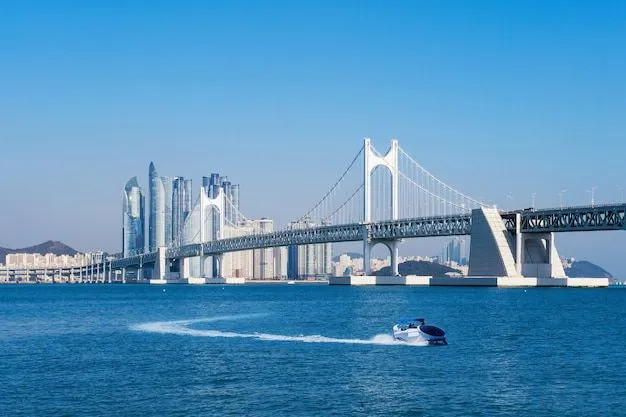
Stop 5Gwangalli Beach & Diamond Bridge
Gwangalli Beach lies west of Haeundae in Suyeong-gu, Busan, a 1.4-kilometer stretch of fine sand 25 to 110 meters wide. Gwangandaegyo, the double-deck sea bridge that crosses the water in front of it, opened in 2003 and glows with multicolored LED lights after dark.
Before you go: Come after sunset to see Gwangandaegyo lit up.
Busan, South Korea
Open in maps
Places to eat nearby
 Food4.2
Haeundae Market
Haeundae Market is a traditional market within walking distance of Haeundae Beach and Haeundae Station. Shops selling tteokbokki, fried snacks, kalguksu noodles, kkwabaegi twisted doughnuts and dwaeji-gukbap pork soup line its lanes alongside raw-fish and grilled gomjangeo (hagfish) restaurants, and dried seafood, fruit, vegetables and rice cakes are sold too.
Before you go: Take Exit 3 of Haeundae Station on Busan Metro Line 2 and walk to the market.
22-1 Gunam-ro 41beon-gil, Haeundae, Busan, South Korea
Open in maps
 Food3.8
Haeundae Pojangmacha (Night Market Stalls)
Orange tent stalls lining Haeundae Beach. Fresh seafood, pajeon (seafood pancake), and soju right by the ocean with the sound of waves and sea breeze. Opens after sunset.
Before you go: Try the live octopus (sannakji) and haemul pajeon (seafood pancake).
236 Haeundaehaebyeon-ro, Haeundae, Busan, South Korea
Open in maps
 Cafe4.7
Blue House on the Stairs
A small coffee shop tucked into the alleys of Gamcheon Culture Village, handy for a break while you walk the terraced hillside.
Before you go: Take Busan Metro Line 1 to Toseong Station, leave by Exit 6 and ride village bus Saha 1-1, Seo-gu 2 or Seo-gu 2-2 to the Gamjeong Elementary School stop to enter the village.
3 Gamnae 1-ro 243beon-gil, Saha-gu, Busan, South Korea
Open in maps